The health and economic benefits of the Wolbachia method
Dengue imposes significant economic costs beyond direct healthcare spending. These include lost productivity due to illness, time spent caring for family members, and longer-term impacts associated with severe cases and deaths.
Using established economic models and published dengue burden data*, reduced dengue transmission in Wolbachia release areas is estimated to have contributed to hundreds of millions of US dollars in averted societal and healthcare costs globally.
These figures are cumulative and are intended to illustrate the scale of economic benefit associated with sustained reductions in dengue transmission.
How these impacts are estimated
Reported dengue case numbers are known to underestimate the true disease burden in many settings. To address this, the World Mosquito Program uses modelling approaches based on peer-reviewed global and regional studies of dengue incidence, hospitalisation rates, and economic impact*.
Estimates are cumulative and assume a conservative level of protection following Wolbachia establishment. They are designed to provide an indication of overall impact, rather than precise or real-time figures.
Latest global impact data
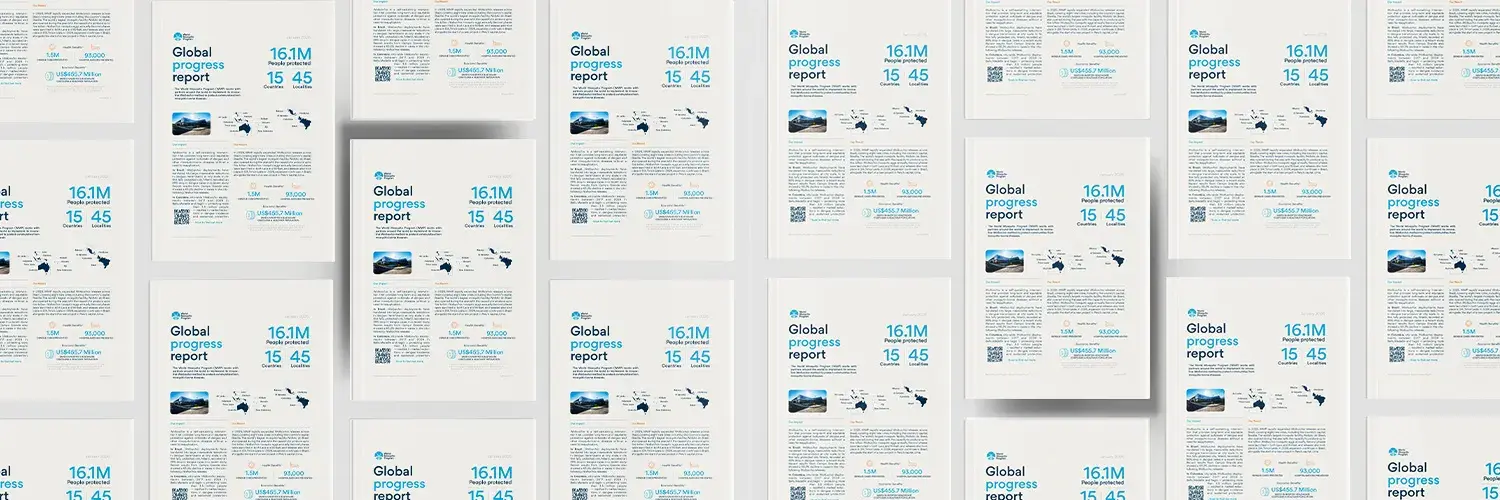
The figures on this page are based on the World Mosquito Program's most recent Global Progress Report, current as of January 2026. This report is updated periodically as new data become available.
For the latest global figures, country-level summaries, and detailed methodology, read the full report:
Economic studies assign a $ value to a day of lost productivity, i.e. for each work day lost due to dengue illness or caring for a family member with dengue, plus the lost future productivity of the small proportion of dengue cases who die. The sum of these $ are the 'societal costs' of dengue (as opposed to the 'direct costs' of providing healthcare to dengue patients). The 'averted societal costs' are these cumulative societal costs that are assumed to have been prevented by preventing X dengue cases since Wolbachia was released in a given location.
How these impacts are estimated
Reported dengue case numbers are known to underestimate the true disease burden in many settings. To address this, the World Mosquito Program uses modelling approaches based on peer-reviewed global and regional studies of dengue incidence, hospitalisation rates, and economic impact*.
Estimates are cumulative and assume a conservative level of protection following Wolbachia establishment. They are designed to provide an indication of overall impact, rather than precise or real-time figures.
Latest global impact data
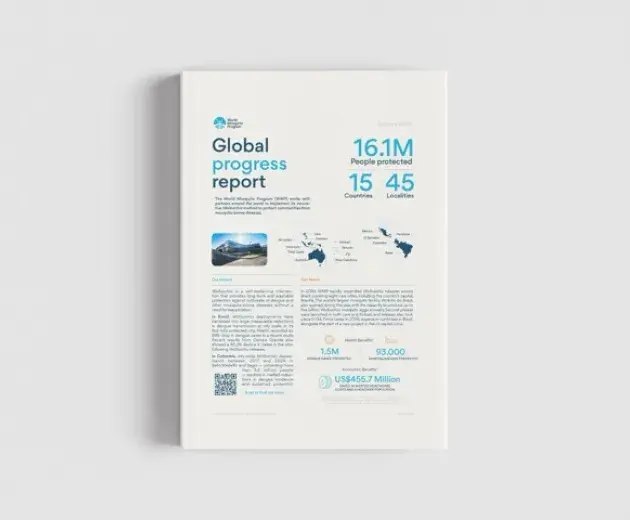
The figures on this page are based on the World Mosquito Program's most recent Global Progress Report, current as of January 2026. This report is updated periodically as new data become available.
For the latest global figures, country-level summaries, and detailed methodology, read the full report: